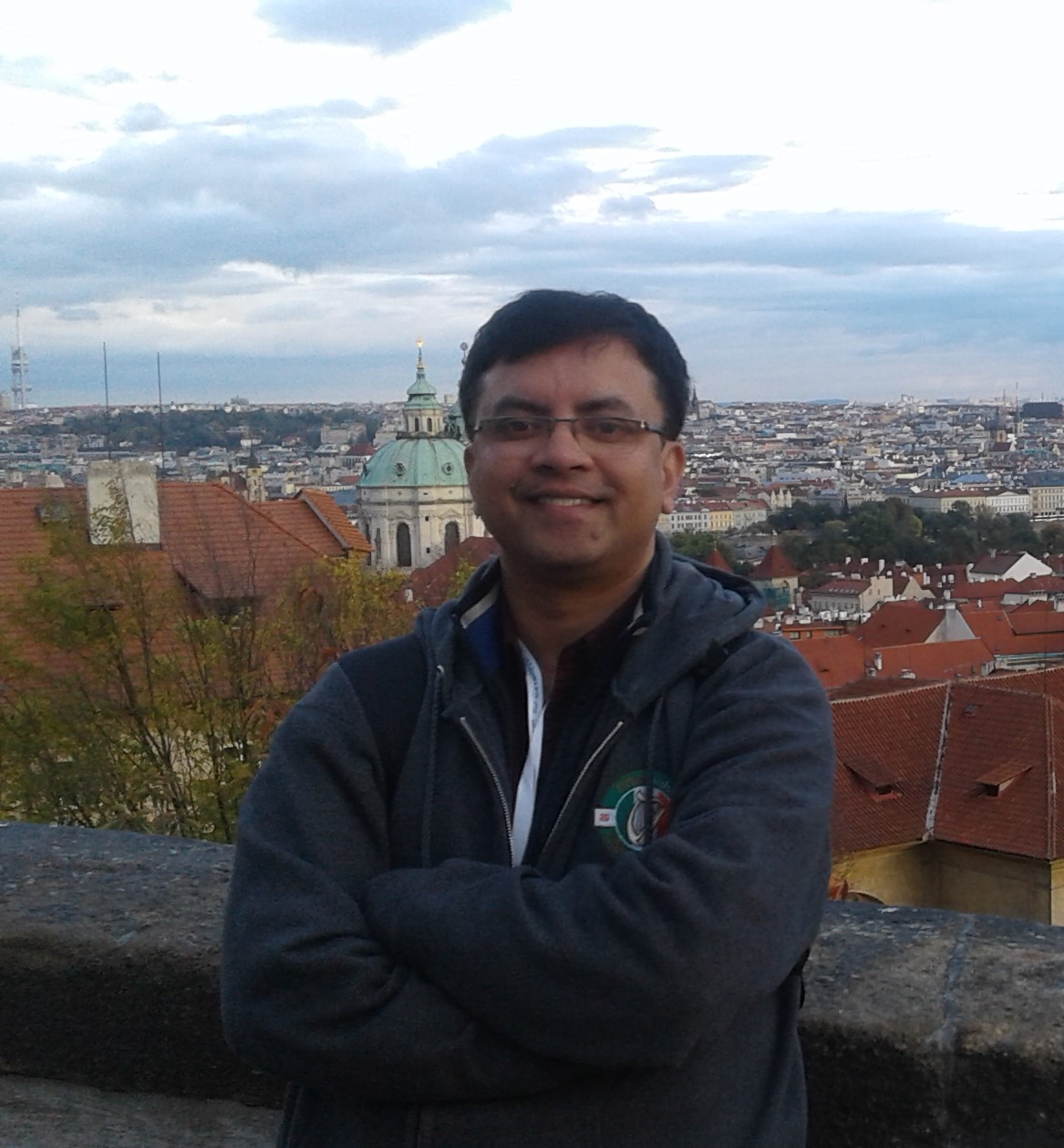
Ravindra NagendraThe body
Yoga trains adaptability; sleep is the overnight readout of the heart–brain–breath loop.
From contemplative to clinical sciences: how does experience arise from a living body?
Consciousness across rest, task, meditation and sleep.
Schools, clinics, meditation centres and wearables.
The brain–body–environment loop, with interoception as the root of selfhood.
Inaugurated at NIMHANS (Dept. of Neurophysiology, ICMR-funded under Prof. T. Desiraju). A whole-body study of yoga and meditation in sound-proof cabins: 91 men registered; TM, Rajayoga, Yoga Nidra, pranayama.
A 1982 symposium on Yoga, Brain & Consciousness brought yoga, neuroscience and philosophy together; the first lab followed with a 13-channel EEG polygraph, a 4-channel portable polygraph and Russian collaborators.
Under Prof. Bindu M. Kutty. Expanded beyond sleep into high-density EEG/ERP, fMRI, cognitive paradigm development, and meditation studies across traditions, alongside whole-night polysomnography, Ayurveda/yoga trials, schizophrenia, and lucid dream decoding.
Founded by Prof. Bindu M. Kutty. Four core areas: sleep & dreams, mind–body & contemplative, clinical & developmental, neurotechnology. Cross-tradition EEG, wearables, open-source tools.
Measurement from neuroscience, maps of a healthy, flexible mind from tradition, tested in real-world settings with advanced neurotechnology.
Yoga trains adaptability; sleep is the overnight readout of the heart–brain–breath loop.
Health is a continuum, measured with one ruler at both ends.
Respect a tradition’s architecture and real differences appear.
The self is read across brain, body, behaviour, experience and environment.
Selected results; see Publications for full citations. Some are preprints, theses or preliminary.
Traditions and field sites, clinical and school partners, engineers and funders.